Skip to content
Call (515) 585-4111
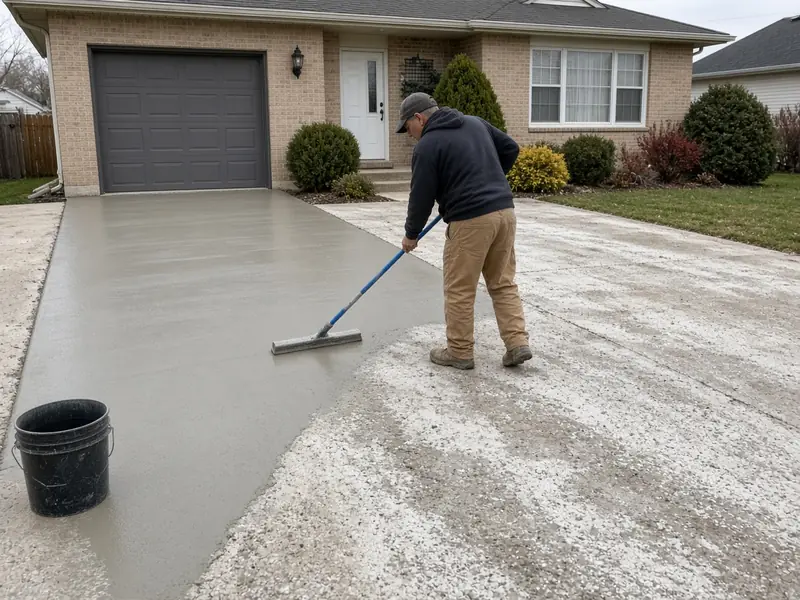
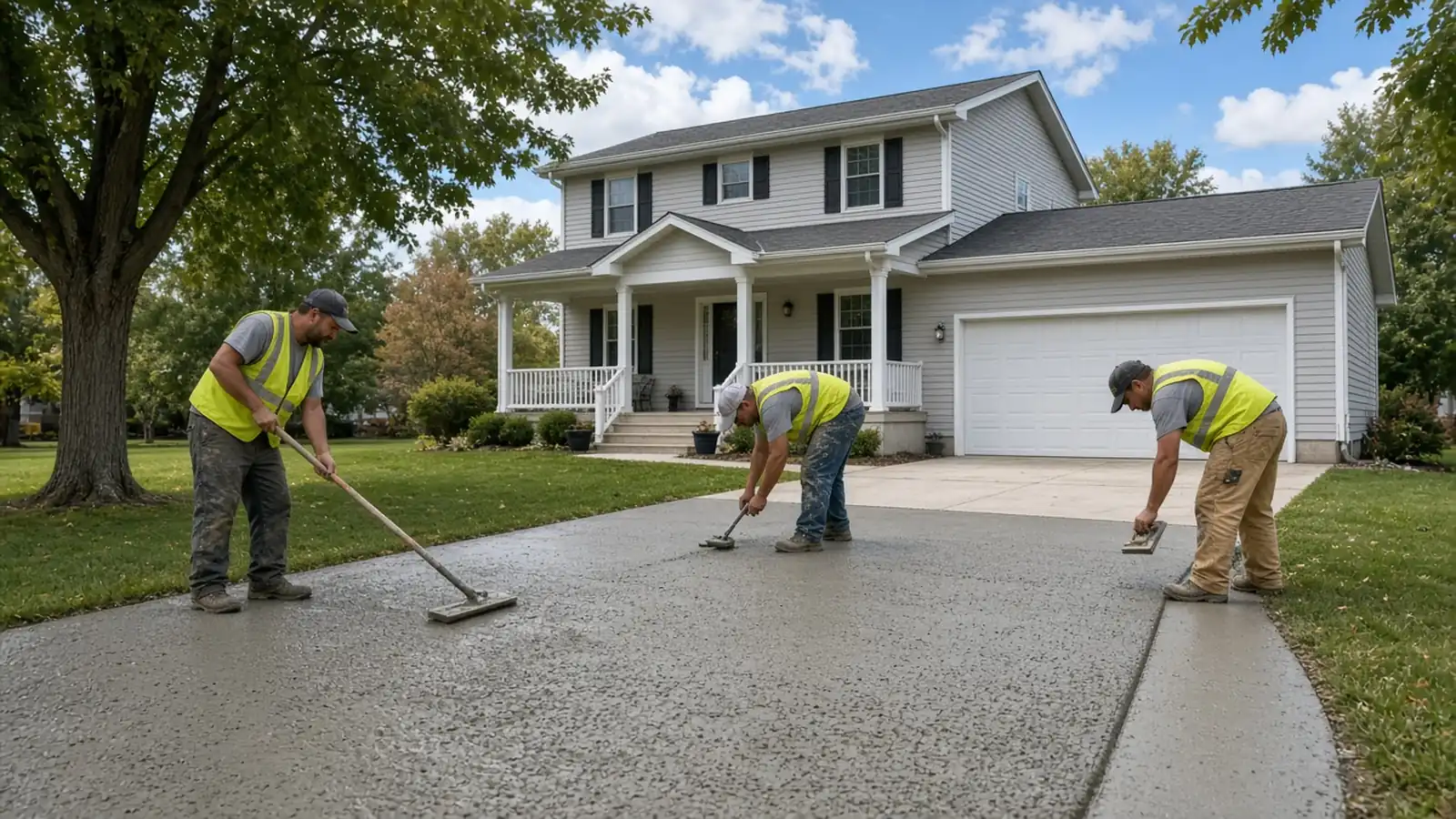
Concrete crew finishing a freshly poured driveway with a bull float and edgers in front of a two-story home with gray siding and a white porch

Des Moines Concrete Contractors | Driveway, Stamped & Repair

Des Moines Concrete Contractor builds and replaces driveways, patios, stamped concrete, sidewalks and slabs for Des Moines homeowners, and pours parking areas, walks and pads for businesses and property managers. Central Iowa concrete has to survive a 42-inch frost line and dozens of thaw-and-refreeze days every winter, so we build every slab for January first and July second.

Tell us what needs pouring, lifting or fixing. We'll come measure and send a written quote that lists each part of the job separately. Call (515) 585-4111, or send the quote form.

  • Site visit before every quote
  • Itemized written pricing
  • Homes and commercial properties
  • Air-entrained mixes for Iowa winters

Request a site visit and itemized quote

Rather talk it through? Call (515) 585-4111

Before and after

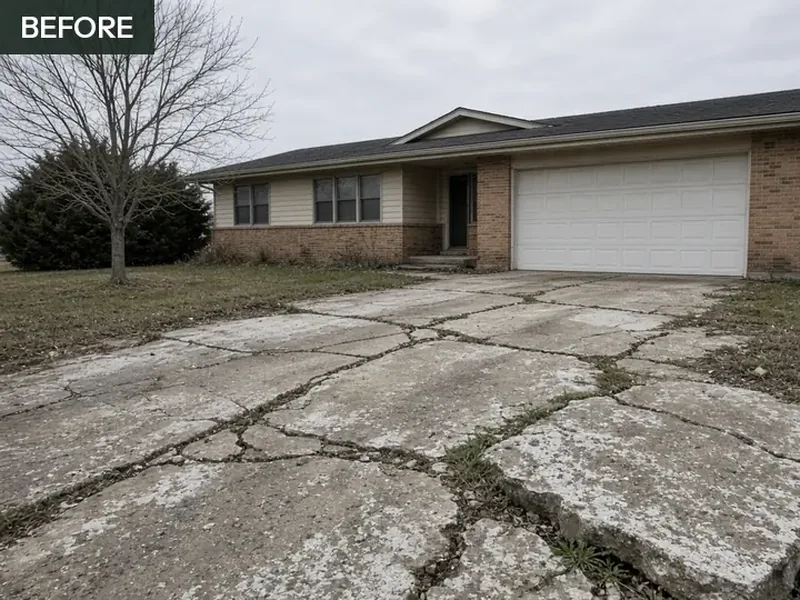
An old driveway broken into plates with heaved panels and weeds in front of a ranch house
BeforeDriveway replacement
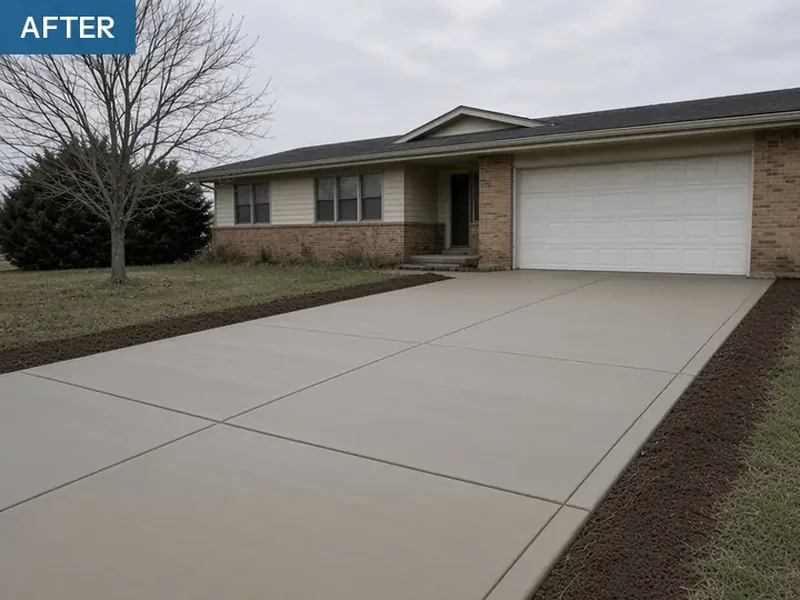
The same driveway replaced with new broom-finish concrete and straight saw-cut joints
AfterDriveway replacement
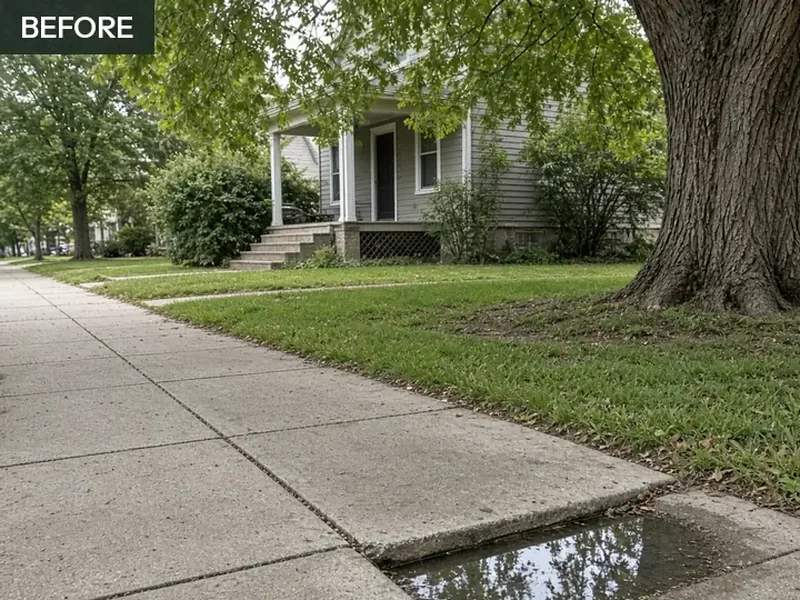
A sunken public sidewalk panel with a trip edge and standing water
BeforeSidewalk panel leveling
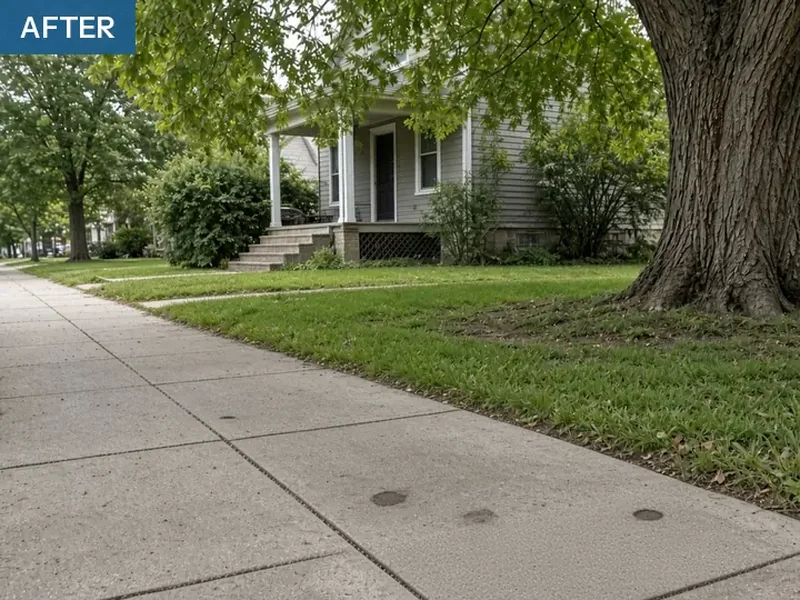
The same panel lifted level with its neighbors and the injection holes patched
AfterSidewalk panel leveling
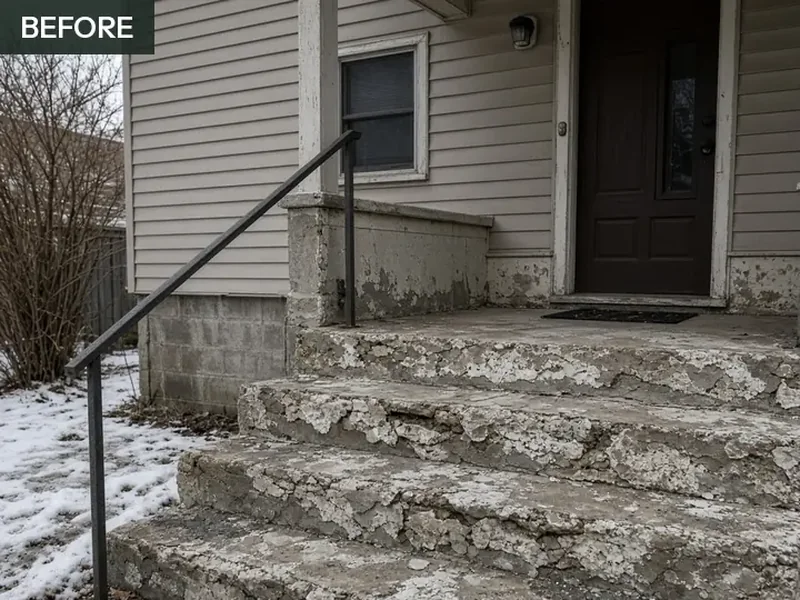
Salt-scaled front steps with flaking, pitted concrete
BeforeStep resurfacing
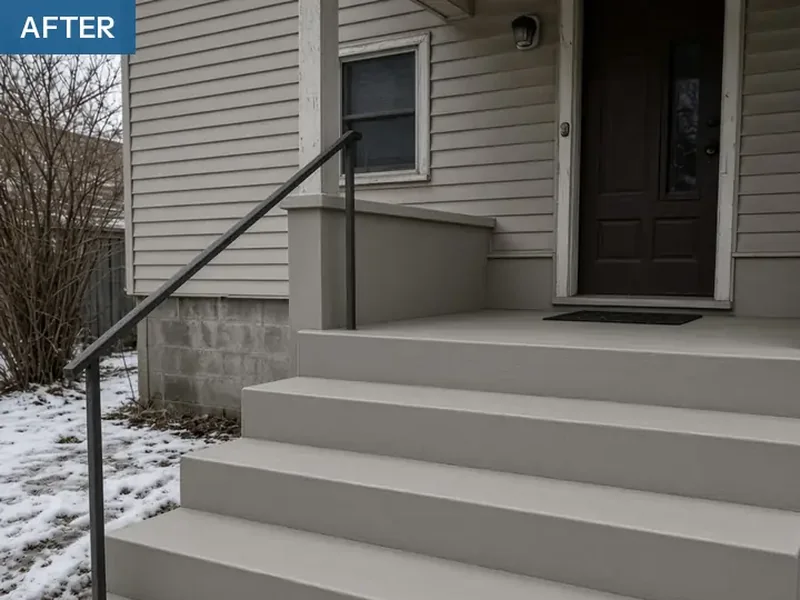
The same steps resurfaced with a smooth new cement overlay
AfterStep resurfacing

Residential Concrete Services in Des Moines

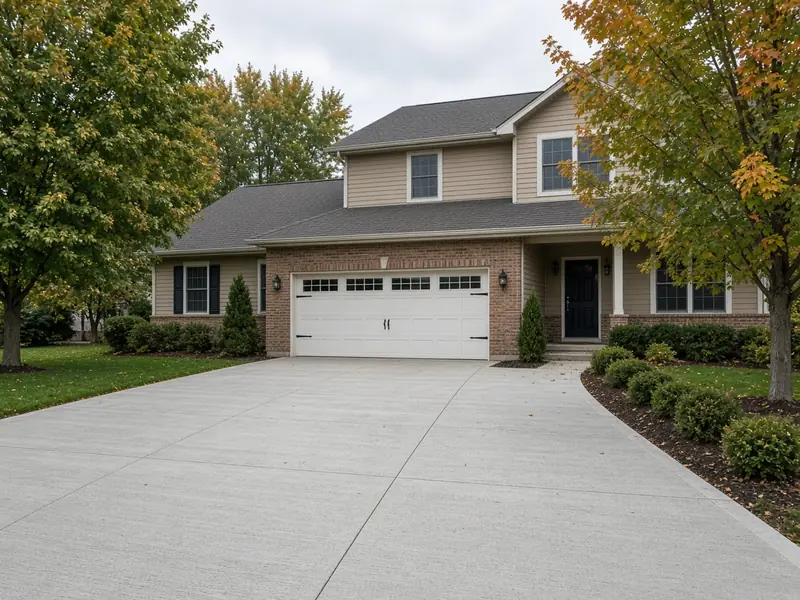
New broom-finish concrete driveway with straight saw-cut joints leading to the two-car garage of a two-story home with tan siding and brick

Concrete Driveway Installation and Replacement

Most driveways we're called out to didn't fail all at once. Water got under a corner, a winter of frost heave lifted one panel, salt ate at the surface, and a few years later the whole thing looks like a broken dinner plate. When it's that far gone, we saw-cut it out, haul the old concrete away, rebuild the base and pour new. HomeGuide's guideline is at least 4 inches of concrete for everyday cars, 5 to 6 inches where an RV or heavy pickup parks, and 6- to 8-inch thickened edges. Where the driveway crosses the public sidewalk and meets the street, the Iowa SUDAS specifications the City of Des Moines adopts call for a residential approach at least 6 inches thick. We lay out every joint before the truck shows up so the cracks we can't prevent land where we planned them.
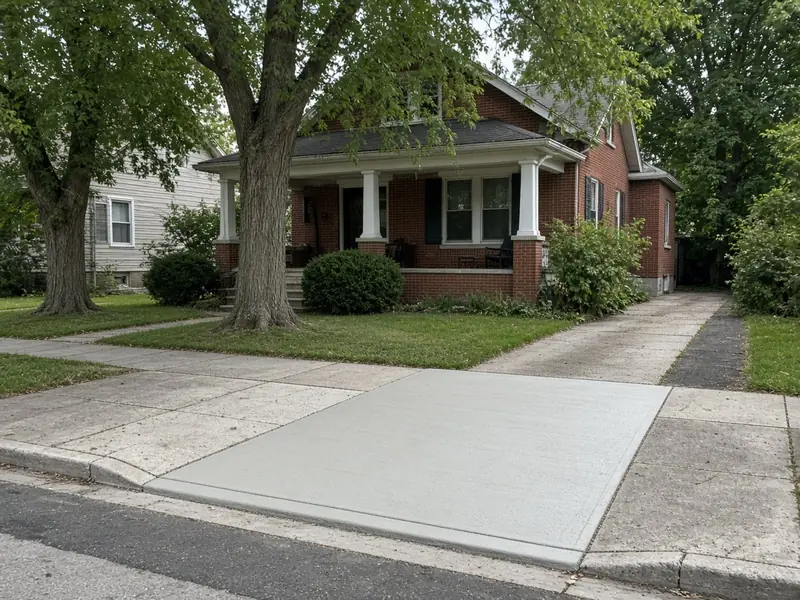
New concrete driveway approach and curb cut crossing the public sidewalk in front of a red brick bungalow

Driveway Approaches, Curb Cuts and Driveway Extensions

Adding a third stall, a side pad for the boat, or a wider apron at the street is one of the most common requests in the metro, and it's the job most likely to involve the City. Des Moines Municipal Code Chapter 102 says nobody may cut into a curb or build, rebuild or remove a driveway approach without a permit, and the City's Engineering Department lists a residential drive approach or curb restoration at $40 each. We draw the sketch with dimensions the City asks for, match the new concrete to the old in height and slope, and pour the stretch between the sidewalk and the street to the City's thickness, not ours.

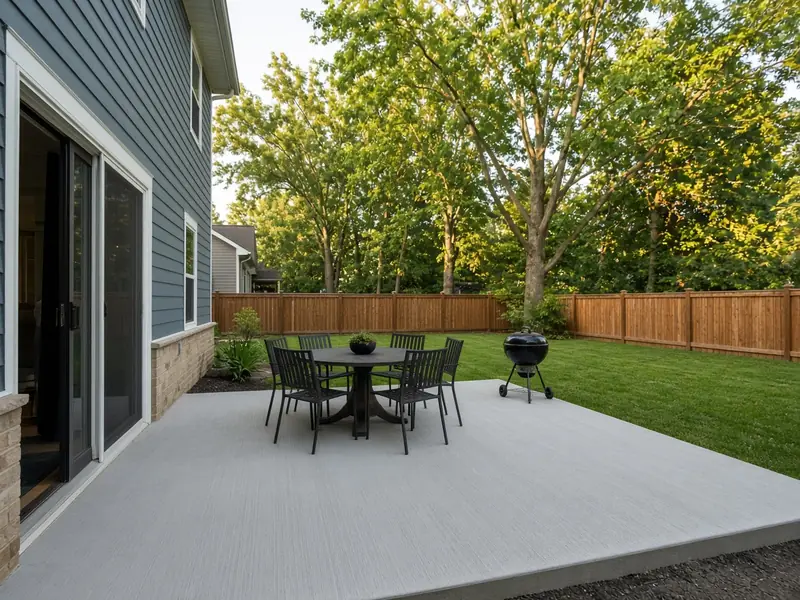
New broom-finish concrete patio off a sliding door with a dining table and a grill in a fenced backyard

Concrete Patios

A plain concrete patio is one of the best-value outdoor projects there is: Angi puts the average deck at about twice the cost of the average concrete patio. We'll shape it to the way you use the yard, whether that's a slab outside the slider for the grill, a wraparound that reaches the side gate, or a big pad with room for a fire pit and a table for eight. Every patio is pitched away from the house so spring rain doesn't run toward your basement wall. If a hot tub, pergola posts or an outdoor kitchen are in the plan, tell us at the start; Angi's guidance for those loads is 6 to 8 inches of concrete with reinforcement.

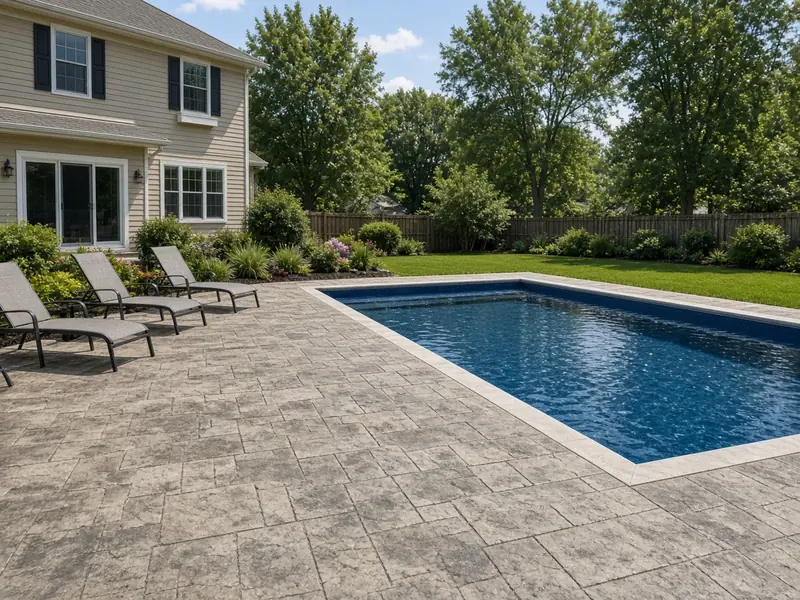
Stamped concrete pool deck in a gray slate pattern around a backyard pool with lounge chairs

Stamped Concrete Patios, Driveways and Pool Decks

Stamped concrete gets you the look of slate, ashlar stone, cobblestone, brick or weathered wood planks on a single poured slab. We color the concrete, press the texture mats in while it's still plastic, and use a release agent that adds the darker shading in the low spots, which is what makes good stamped work look like stone instead of a pattern. On a stamped job the clock is the boss, so we staff those pours heavier than a broom finish. Around here we also seal stamped surfaces on a schedule, because salt and freeze-thaw cycles are hard on decorative concrete that's left bare.

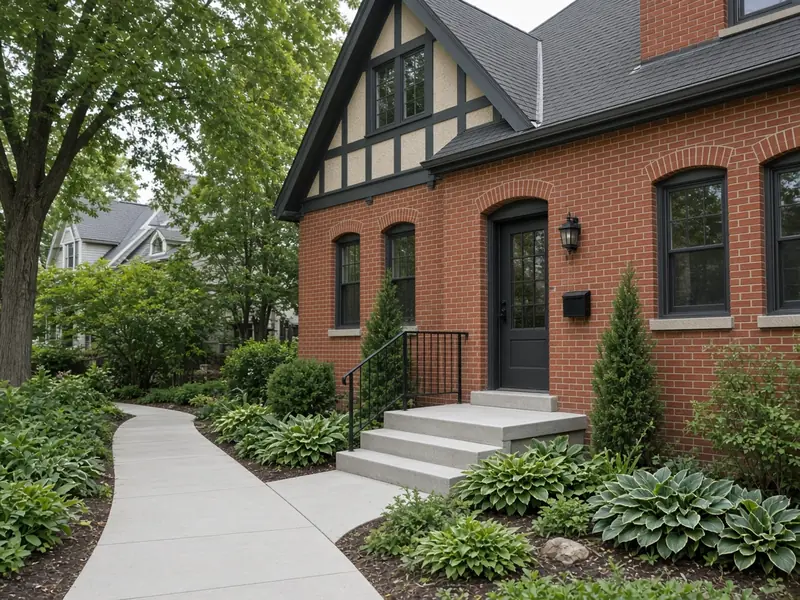
New concrete front steps with a black metal railing and a curving front walk at a red brick Tudor-style house

Sidewalks, Front Steps and Stoops

In Des Moines the public walk in front of your house is your responsibility. The City's sidewalk page says state law requires the abutting owner to keep it safe, and an owner who gets a defect notice has 180 days to fix it. We replace heaved and broken squares, rebuild front walks and back walks, and pour new steps and landings at the front door, where a crumbling nose on a step is a fall waiting to happen. A residential sidewalk permit runs $40, and we'll take care of the permit so the work is inspected at the right thickness and slope.

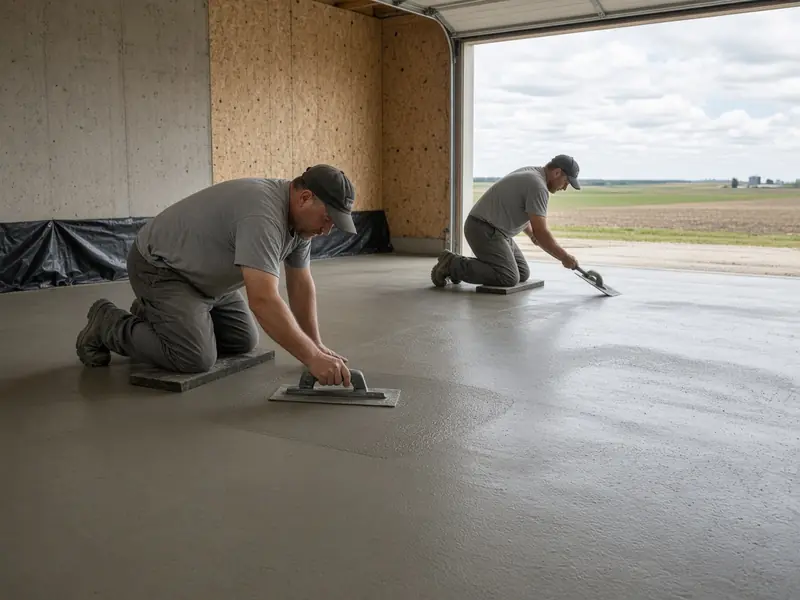
Two finishers on knee boards hand-troweling a new concrete floor inside a garage shop with farmland outside

Garage Floors, Shop Slabs and Basement Floors

A garage floor in Des Moines lives through slush dripping off the truck all winter, so the slab and its slope matter as much as its strength. We pour garage and detached-shop floors over a compacted base, add a vapor barrier where the space is enclosed, and set the thickness for what will sit there, whether that's a minivan, a lift or a chest freezer. We also replace cracked or settled basement floor slabs. Planning an epoxy or polyaspartic coating later? Mention it at the quote, because the finish we leave affects how well a coating grips.

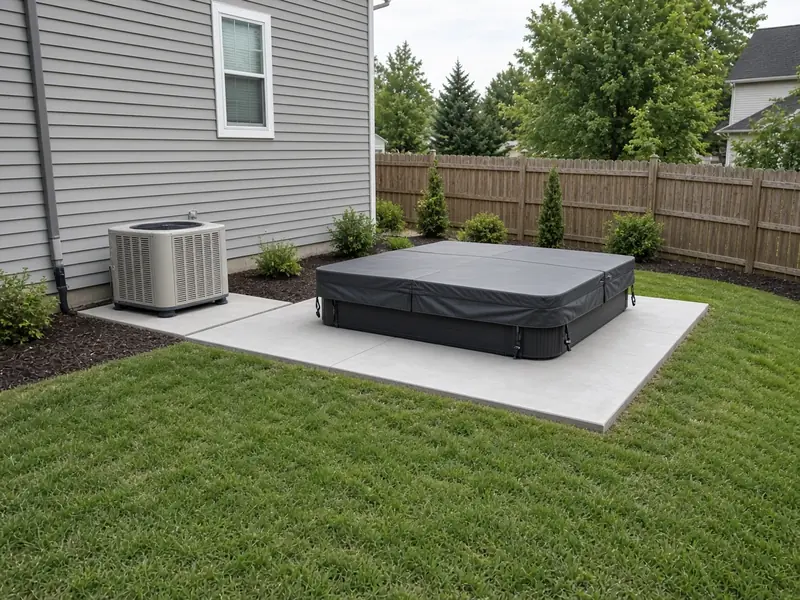
New concrete pads holding a covered hot tub and an air conditioning unit beside a house with gray siding

Pads for Sheds, Hot Tubs, AC Units and Generators

A small pad looks easy until it heaves an inch the first spring. We dig out the topsoil, compact a stone base, set level forms and pour pads for garden sheds, spas, condensers, mini-split units and standby generators. If a pad will carry a building, tell us how big, because footings for permanent structures in Des Moines generally have to go below the City's 42-inch frost line design depth, and that changes the design.

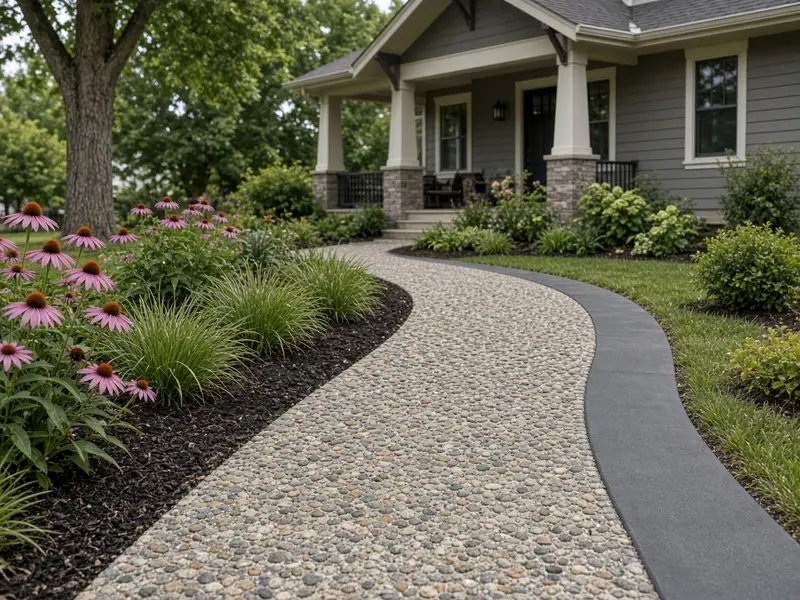
Curving exposed aggregate walkway with a charcoal colored concrete border leading to a craftsman house

Exposed Aggregate, Colored and Stained Concrete

Not everyone wants a full stamp pattern. Exposed aggregate is made by washing the cement paste off the surface right after finishing so the stones in the mix show through; it's grippy underfoot, and it hides dirt and tire marks better than a smooth slab. Integral color is pigment added to the truck, so the color runs all the way through and a chip doesn't flash gray. Acid and water-based stains go on after the slab cures and give a mottled, variegated look, and they work on older concrete too. Angi's patio cost guide lists exposed aggregate at $2 to $3 a square foot and stained concrete at $5 to $10, and we'll tell you honestly which one we'd pick for your project.

Commercial Concrete Services in Des Moines

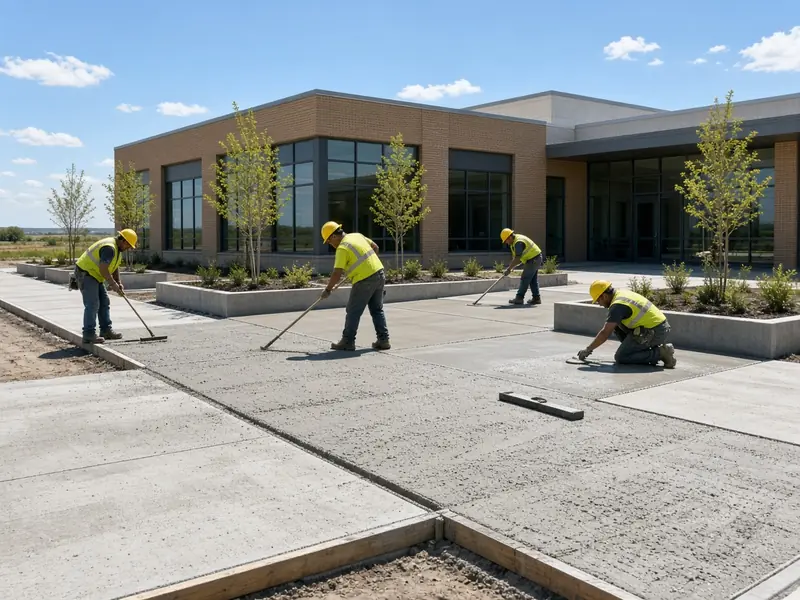
Crew in hard hats finishing new concrete walks and an entry plaza in front of a brick medical office building

Commercial Flatwork and Site Concrete

Offices, retail centers, churches, clinics, schools and apartment complexes all need the same core concrete: entry walks, plazas, patios, dumpster enclosures and pads for mechanical equipment. Hand us the civil plans or walk the site with us, and our bid will break out thickness, reinforcing, base and finish line by line, so it's easy to compare with other numbers. We stage pours so tenants and customers always have a way in.

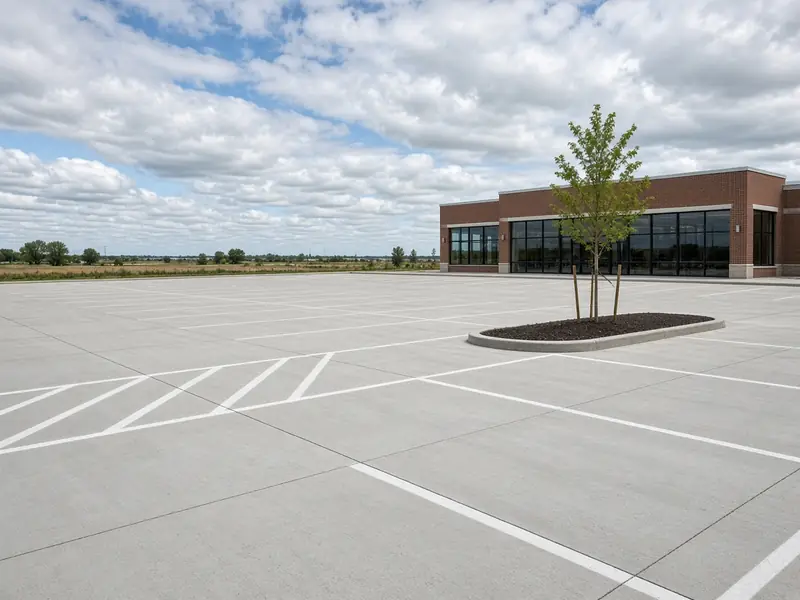
New concrete parking lot with saw-cut joints, striped stalls and a curbed tree island in front of a brick retail building

Concrete Parking Lots and Drive Aisles

A concrete lot is built for the long haul: HomeGuide puts a well-kept concrete driveway at 30 to 40 years, and a lot built with the same care holds up to plows, fuel drips and summer heat. We grade and compact the subgrade, pour stalls and drive aisles with joints sized to the load, and slope everything toward the intakes so meltwater doesn't sit and refreeze in the travel lanes. Where garbage trucks, delivery vans and fire apparatus turn and stop, the pavement gets thicker.

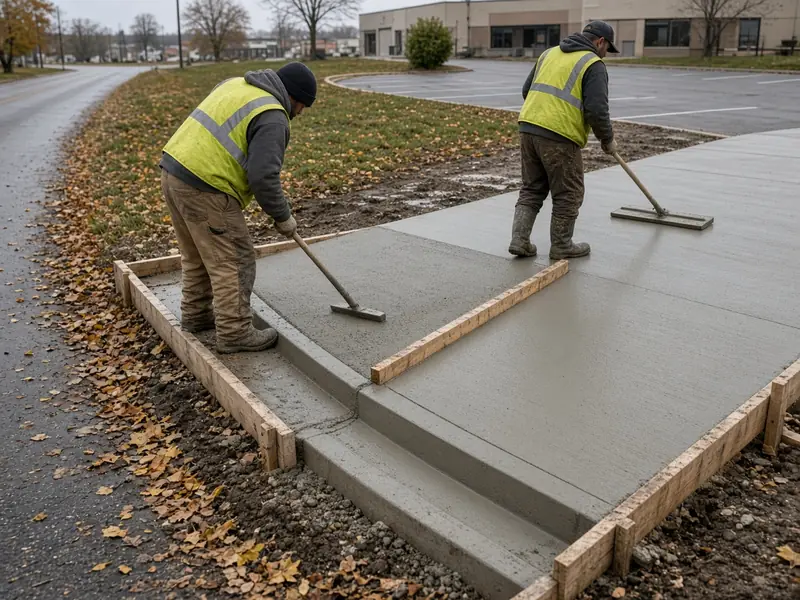
Two workers finishing a new concrete curb and gutter and commercial driveway approach beside a parking lot on a fall day

Commercial Sidewalks, Driveway Approaches and Curb

Concrete in the right-of-way has its own rulebook. The City of Des Moines permits commercial sidewalk work at $0.20 per lineal foot with a $60 minimum, and the SUDAS driveway detail calls for commercial and industrial approaches at least 7 inches thick, compared with 6 for a house. Where a public walk crosses a driveway, SUDAS asks for at least 6 inches or the driveway's thickness, whichever is more. We build approaches, curb and gutter sections and public walks to those details so they pass inspection the first time.

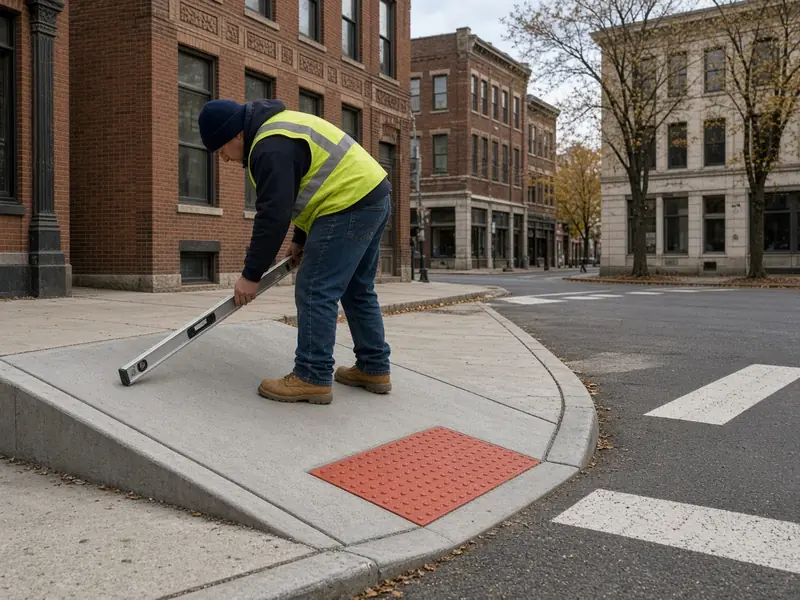
Worker checking the slope of a new concrete curb ramp with a red detectable warning panel at a downtown crosswalk

ADA Curb Ramps and Accessible Routes

Accessible routes are measured, not eyeballed. The 2010 ADA Standards cap a ramp's running slope at 1:12 and its cross slope at 1:48, and SUDAS targets a 1.5 percent cross slope on public walks with a 2 percent maximum. We check forms with a digital level before ordering concrete, because grinding a ramp into compliance after the fact rarely works.

Worker running a ride-on power trowel across a new warehouse floor slab beside tall storage racks

Warehouse, Distribution and Shop Floors

The Des Moines metro has no shortage of warehouses, contractor shops and light-industrial buildings, and their floors take forklifts, pallet jacks and rack legs every day. We pour to the engineer's thickness, reinforcing and joint plan, over a proof-rolled subgrade and compacted stone, and we work out the saw-cut layout ahead of time so joints don't land under a rack leg or in the middle of a forklift lane.

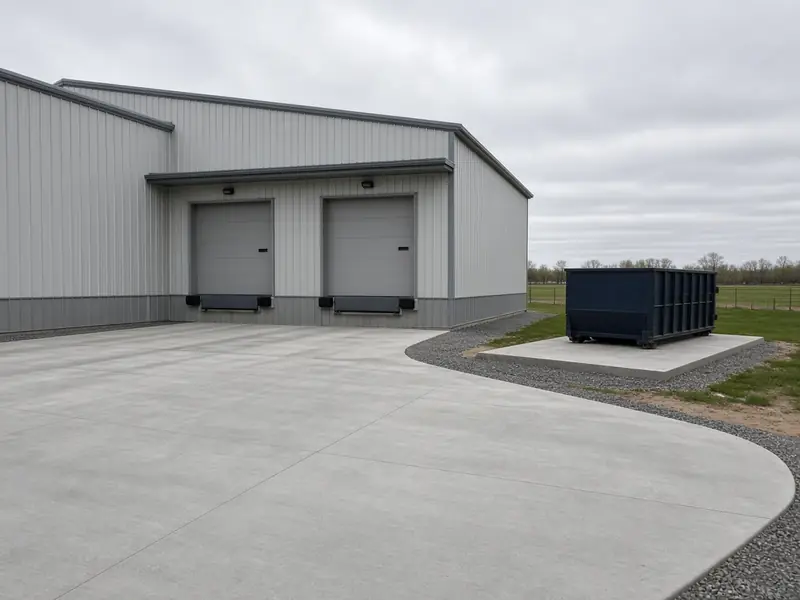
New concrete loading apron at two dock doors of a metal building, with a separate concrete dumpster pad

Dumpster Pads, Loading Aprons and Equipment Pads

The patch of pavement where a garbage truck drops its front forks every week is where asphalt dies first. A thick, reinforced concrete pad fixes that for good. We also pour dock aprons, transformer and generator pads, and pads for chillers and rooftop-unit equipment set at grade, sized to the drawings.

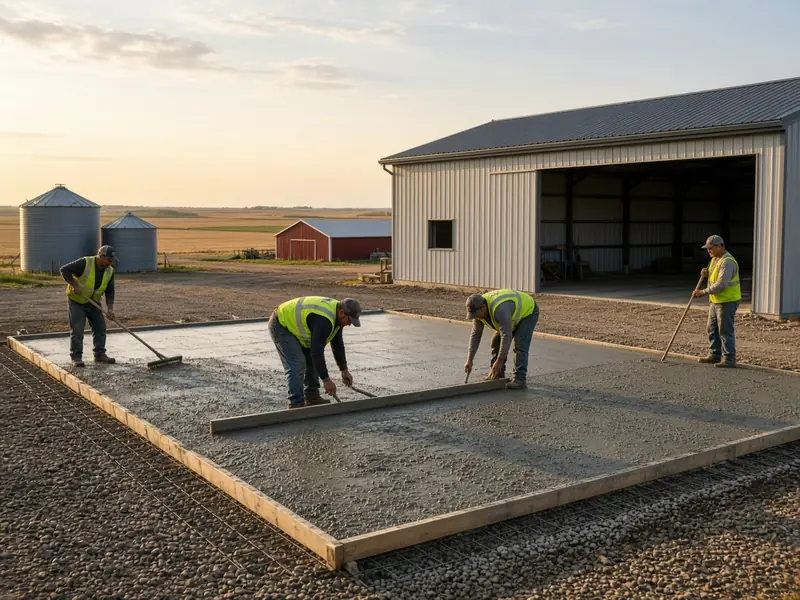
Crew screeding a concrete slab over wire mesh beside a new machine shed, with grain bins, a red barn and fields behind

Acreage, Farm and Outbuilding Slabs

Drive a few minutes past the edge of the metro and you're in acreage country: pole barns, machine sheds and hobby shops still sitting on gravel. A concrete floor turns one into a dry, clean, usable building. We pour slabs inside existing buildings, aprons at big overhead doors and wash-down pads for trailers and equipment, and we plan the truck or pump access before pour day so nobody's guessing.

Concrete Repair, Leveling and Replacement in Des Moines

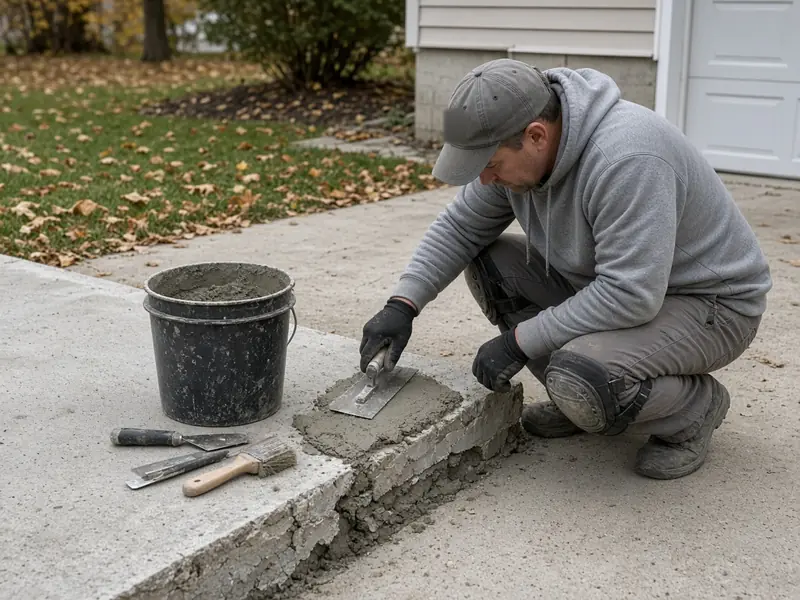
Worker patching a chipped corner of a concrete garage apron with repair mortar and a trowel

Concrete Repair

Not every bad slab needs a jackhammer. A spalled step, a chipped garage lip, a broken corner at the end of the driveway or a single cracked sidewalk square can usually be cut back and repaired or replaced on its own. We look at why it broke first, since a downspout dumping water at the edge or a sinking base will break the new concrete the same way, and then we fix the cause along with the concrete.

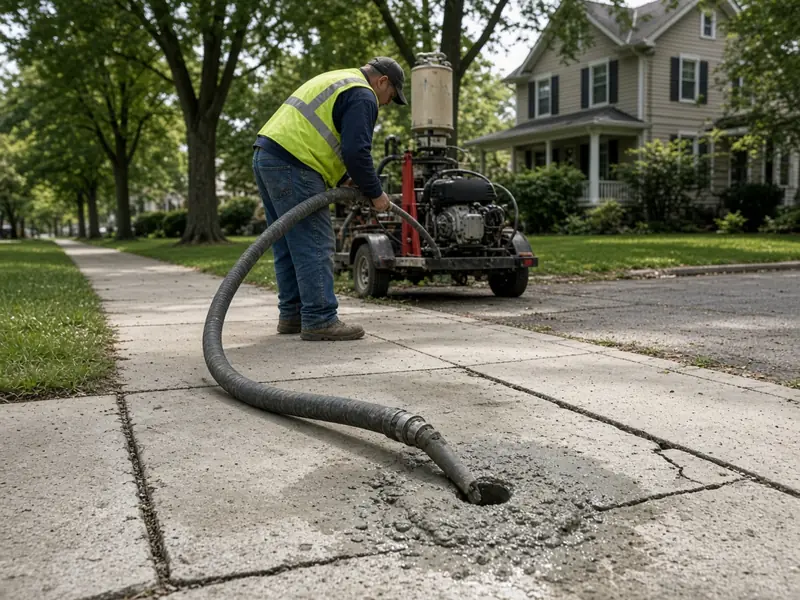
Worker pumping grout through a hose into a drilled hole to raise a sunken sidewalk panel

Concrete Leveling and Mudjacking

When a slab is still in one piece but has dropped, lifting it is usually cheaper than replacing it. Think of the sidewalk square that now trips the mail carrier, the patio that tips toward the back door, or the driveway panel that sank at the garage. Mudjacking means drilling holes and pumping a cement-based slurry under the slab until it rises back into place, then patching the holes. HomeGuide puts mudjacking at $4 to $9 a square foot and says it often costs 30 to 50 percent less than tearing out and replacing. A slab that's already broken into pieces isn't a good candidate, and we'll say so.

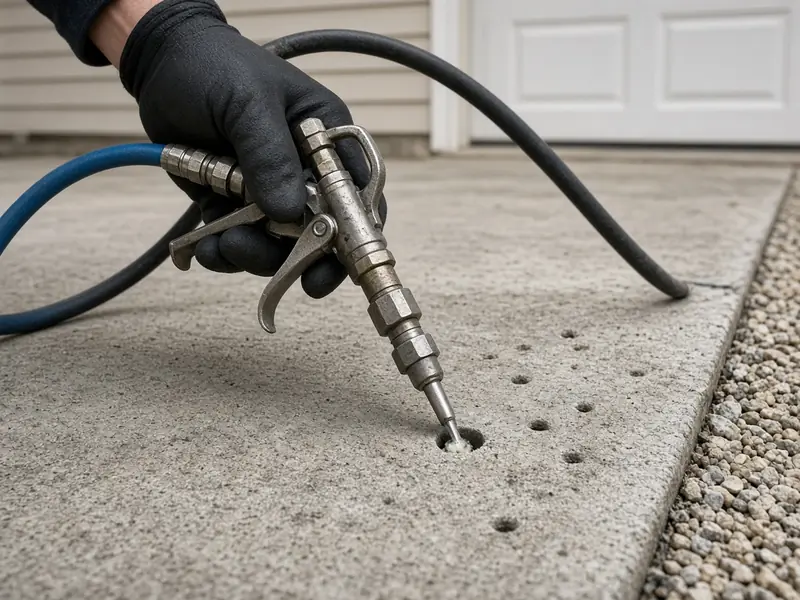
Gloved hand injecting polyurethane foam through a small drilled port in a settled concrete slab

Polyurethane Foam Leveling (Polyjacking)

Foam leveling does the same job with smaller holes and a lightweight expanding polyurethane instead of slurry. HomeGuide lists it at $8 to $25 a square foot, with a 15-minute cure versus about 24 hours for mudjacking, and notes that foam won't wash out. We suggest foam where soft or wet ground can't take the extra weight of slurry, or where the slab needs to be back in use the same day.

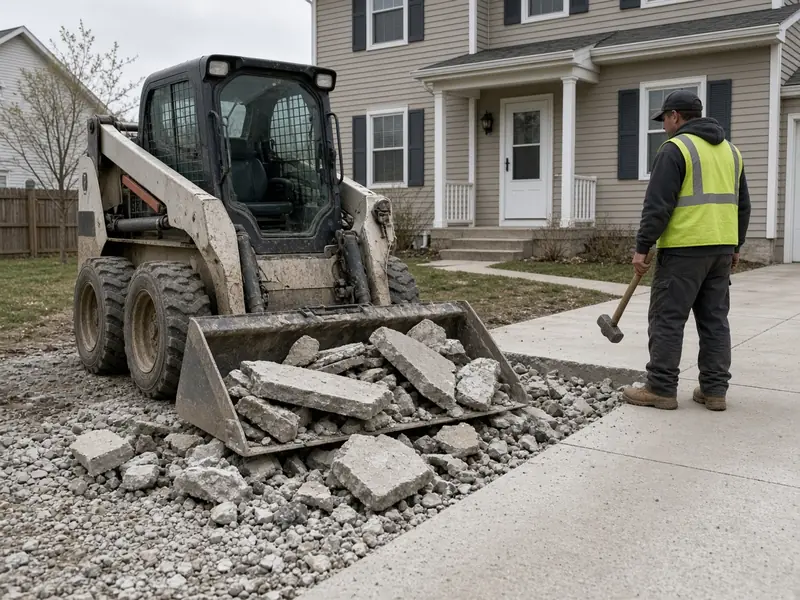
Skid steer loading broken slabs of an old driveway during tear-out while a worker stands by

Concrete Removal and Replacement

Some concrete is past saving: broken into plates, heaved by frost, or scaled across most of the surface. In those cases, patching is throwing money at the problem. We cut a clean line, break out and haul off the bad sections, deal with what's underneath, usually soft or wet soil, and pour new. If only two panels have failed and the rest is sound, we'll replace just those and tell you straight how much life the rest has left.

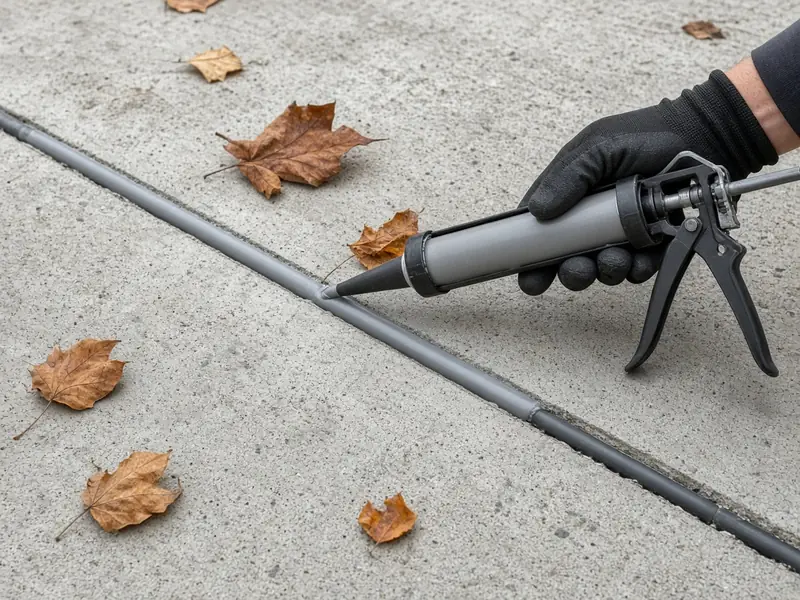
Gloved hand filling a cleaned driveway control joint with gray sealant from a caulk gun

Concrete Crack Repair and Joint Sealing

Hairline shrinkage cracks show up in nearly every slab and aren't worth losing sleep over. The ones to watch are cracks that keep opening, that have one side higher than the other, or that let water straight through to the base. In a climate with as many freeze-thaw days as ours, water in a crack freezes and pries it wider each time. We clean out those cracks and the open joints and fill them with a flexible sealant that moves with the slab.

Worker spreading a thin resurfacing overlay across an old salt-scaled driveway with a squeegee

Concrete Resurfacing and Overlays

Salt scaling is the classic Des Moines problem: the top layer flakes off and leaves a pitted, rough surface even though the slab underneath is solid. That's where resurfacing makes sense. After cleaning and patching, we trowel on a thin cement-based overlay that bonds to the old concrete, and a stamped or decorative overlay can give a tired patio a new look. If the slab itself is cracking or moving, an overlay will crack with it, so we only recommend it for surface damage.

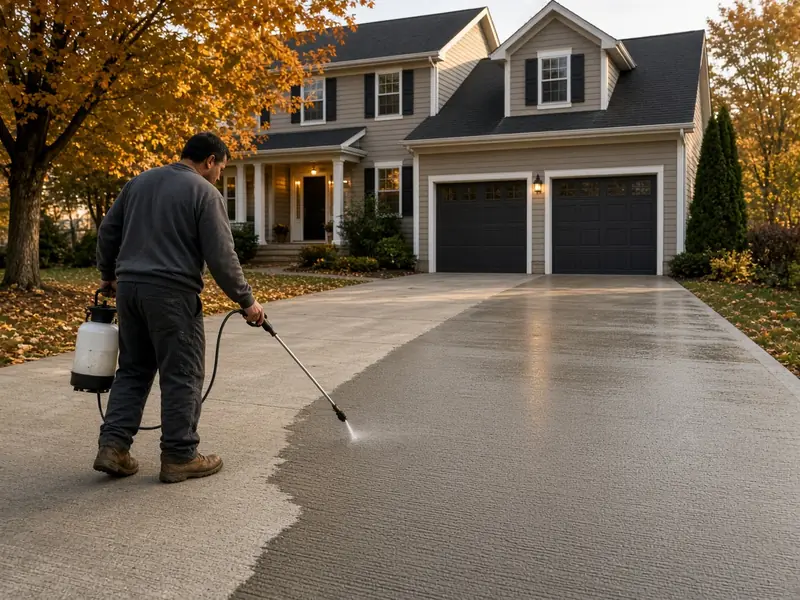
Worker spraying clear sealer onto a broom-finish driveway in front of a two-story home with fall trees

Concrete Sealing

Sealer is the cheapest thing you can do for your concrete. It keeps water, oil and deicing salt from soaking in, and on stamped or colored concrete it keeps the color rich. HomeGuide recommends waiting 28 to 30 days after a pour before the first coat, then resealing every 2 to 3 years. We match the sealer to the finish and to whether it's carrying cars, foot traffic or patio furniture.

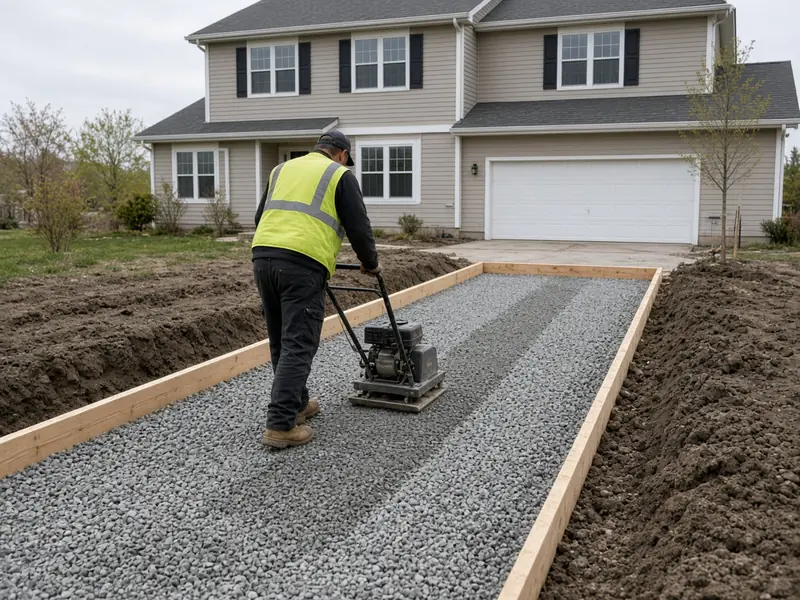
Worker running a plate compactor over a crushed stone base inside new driveway forms, with dark clay soil at the edges

Why Des Moines Concrete Contractor

Concrete is a lot like a house's roof: what makes it last is the part nobody sees once the job is done. When a slab cracks or sinks early in central Iowa, the cause is usually on a short list. It was poured on soft or wet soil, the base was thin or never compacted, the mix didn't have enough entrained air for freeze-thaw, the joints went in late or too far apart, a downspout emptied right at the edge, or it was rushed in before a cold snap. In our opinion, the concrete itself is rarely to blame. That's why our quotes list excavation, base, thickness, reinforcing, joints and curing as separate lines. You can see exactly what you're paying for, and you can hold our bid up against anyone else's and compare like for like.

Building on Central Iowa Ground and Weather

Glacial Till at the Edge of the Des Moines Lobe

Des Moines sits right where the last glacier to enter Iowa stopped. The Iowa Geological Survey says the Des Moines Lobe reached its southern limit at the site of today's city about 16,000 years ago and left a poorly drained landscape of pebbly clay, sand and gravel behind. The glacier also set the present course of the Raccoon River. What that means for concrete is variety: one yard can be firm loam, and the next one over can be soft, wet clay loam or a pocket of sand. We probe and dig on the site visit instead of assuming.

Wet Spots and Low Ground

The common upland soils on the Lobe come in a sequence. The USDA describes Clarion soils as moderately well drained loams formed in glacial till on rises, and Webster soils as poorly drained silty clay loams on flat or concave ground. In a subdivision, that original sequence is often buried under fill, but the low spots still collect water. A slab poured on a wet, soft base is going to settle, so we dig out soft material and replace it with compacted stone before we form.

A 42-Inch Frost Line

The City of Des Moines' local design criteria list a frost line depth of 42 inches. Footings for anything structural, like a garage, a porch roof or a deck attached to a slab, generally have to go below it. Flatwork like a driveway or patio sits above it, so it rides up and down with the ground, which is why base, drainage and joints matter so much more here than in a warm-weather city.

About 82 Freeze-Thaw Days a Year

Des Moines gets about 128 days a year when the low drops below 32°F and about 46 when the high stays below freezing (NOAA). That leaves roughly 82 days a year when the temperature crosses the freezing line in a single day, with January averaging a high of 30.9°F and a low of 13.8°F. Every one of those cycles lets water in the concrete's pores freeze, expand and thaw again. The American Concrete Pavement Association says properly air-entrained concrete resists that freeze-thaw and deicer scaling, and every exterior slab we quote uses an air-entrained mix.

Snow, Salt and a "Severe" Weathering Rating

Des Moines averages 36.5 inches of snow a season, according to NOAA, and the City's local design criteria rate the weathering risk as Severe. Plows, shovels and salt are part of life here, and salt is hard on concrete in its first winter. We'll tell you what to put on a new slab, and when, at the walk-through.

Spring and Summer Rain

NOAA's normals put annual precipitation at 36.55 inches, and it's heaviest in May and June, which each average more than 5.2 inches. That's right in the middle of pouring season. Every slab we pour is sloped away from the house, and we look at gutters, downspouts and the neighbor's grade before the forms go in, because water that ends up under a slab in June is the frost heave you'll see in February.

Des Moines Pour-Season Snapshot (NOAA 1991–2020 normals, Des Moines International Airport)
MonthAvg high (°F)Avg low (°F)Nights below 32°FPrecip (in)
Jan30.913.829.51.08
Feb35.718.024.91.34
Mar49.229.619.02.17
Apr62.040.65.74.02
May72.452.30.25.24
Jun81.962.405.26
Jul85.666.403.82
Aug83.664.204.17
Sep76.955.403.18
Oct63.442.94.12.78
Nov48.330.217.01.91
Dec35.919.527.41.58

Median last spring freeze: April 18. Median first fall freeze: October 20.

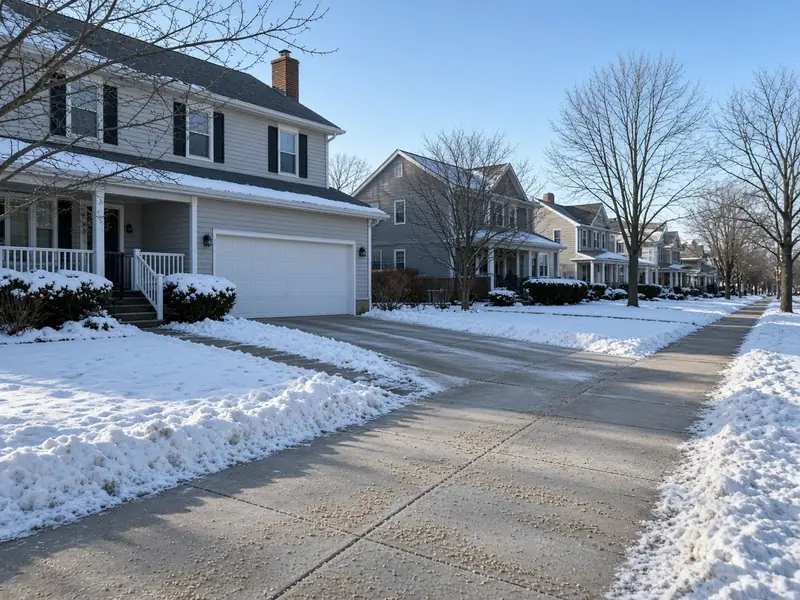
Shoveled concrete driveway and sidewalk with sand for traction between snowbanks on a sunny winter morning

5 Things to Know Before You Pour Concrete in Des Moines

  1. 1. Work at the Street Needs a City Permit

    In Des Moines, a driveway approach, curb cut or public sidewalk needs a City permit: $40 for a residential sidewalk and $40 per approach, with about two business days for review. The suburbs and Polk County have their own rules, so we check the address first.

  2. 2. A Sidewalk Notice Has a Clock on It

    If the City sends a defective-sidewalk notice, you have 180 days to fix it, with a permit. Income-eligible owners can apply for help. Call us early so the work fits the window.

  3. 3. Iowa One Call Comes Before Any Digging

    Iowa law requires notice to Iowa One Call at least 48 hours before digging. Private lines like LP gas, sprinklers and grill lines don't get marked, so point them out.

  4. 4. Make Sure Your Contractor Is Registered in Iowa

    Iowa contractors who earn $2,000 or more a year have to register with the state and show workers' comp coverage. You can check any contractor's registration before you sign.

  5. 5. The Season Sets the Schedule

    The median last spring freeze in Des Moines is April 18 and the first fall freeze is October 20 (NOAA). Below 40°F, concrete needs blankets or a different day, so at either end of the season we'll move the date rather than gamble with your slab.

Concrete Materials and Methods

Subgrade and Stone Base

Concrete handles weight beautifully and handles moving ground terribly. On every job we strip the topsoil, dig out soft or wet material, and compact a crushed-stone base in lifts. A good base costs a little more on the quote and saves the whole slab later.

Air-Entrained Concrete

An air-entraining admixture fills the mix with countless microscopic bubbles that give freezing water somewhere to go. The Iowa SUDAS specification for sidewalks and driveways targets 7 percent air, with a 6 percent minimum and 8.5 percent maximum. We hold our exterior mixes to the same range.

Reinforcement: Rebar, Wire Mesh and Fiber

Steel doesn't stop concrete from cracking; it keeps a crack from opening up or letting one side drop. We use a rebar grid in driveways and heavier slabs, welded wire mesh for lighter flatwork, and synthetic fiber to help with early surface cracking. HomeGuide prices driveway rebar at $1 to $3 a square foot.

Control Joints

Concrete shrinks as it hardens, so any slab of real size will crack somewhere. Joints decide where. SUDAS keeps driveway panels to no more than 12 feet long and spaces sidewalk joints the same as the walk's width, and we follow that rhythm, tooling joints in fresh concrete or saw-cutting them on time. Joints that are late or too far apart cause a large share of random cracks.

Curing and Cold-Weather Protection

Fresh concrete isn't drying out as it hardens. It's hydrating, a chemical reaction between cement and water that keeps building strength for weeks, so keeping the water in is the whole game. By HomeGuide's timeline you can walk on it after 24 to 48 hours, drive on it after at least 7 days, and count on full strength at around 28 to 30 days. Right after finishing we spray a curing compound or cover the slab, and in April, October and November we keep insulated blankets on the truck in case the overnight low dips.

How a Concrete Project Works With Us

  1. 1. Site Visit

    Somebody from the crew walks the property with you, tapes it out, and looks at what will move the price: where water goes after a storm, how soft the ground is, tree roots, what shape the old concrete is in, and how close a ready-mix truck can back up. Show us how you plan to use the space, and if you've saved pictures of finishes you like, have them handy.

  2. 2. Written Quote

    Your quote breaks the work into its parts: tear-out, excavation, base, thickness, reinforcing, finish, sealing and any permit. That makes it easy to see where the money goes and to decide whether anything can wait until next season.

  3. 3. Permits and Utility Locates

    If the project touches the street, the public sidewalk or a structure, those permits go on the schedule. Iowa One Call is notified before anyone digs.

  4. 4. Tear-Out, Excavation and Base

    Demolition happens first, and the broken concrete gets loaded out and hauled away, never buried on site. We excavate any soft soil, place crushed stone, and run a compactor over each layer. Forms and reinforcing go in after that, and we shoot the grades for slope and height before calling in the concrete order.

  5. 5. Pour and Finish

    On pour day the concrete is placed, screeded, floated and finished to the texture you chose. Stamping and color happen during that short working window, and joints are tooled or sawed on schedule.

  6. 6. Cure, Clean Up and Walk-Through

    For the first several days we keep the slab protected. Then we pull the forms, backfill the edges, clear out every scrap and walk the finished job with you. You'll leave that walk-through knowing when you can park on it, when the first coat of sealer should go on, and what's safe to put on it once the snow flies.

Repair, Level or Replace? A Quick Guide
What you seeWhat usually makes sense
Hairline cracks, slab still levelCrack and joint sealing, then sealer
Slab in one piece but sunk or tiltedMudjacking or foam leveling
Surface flaking or pitted from salt, slab solidResurfacing overlay, then sealer
One or two broken panels, rest soundReplace those panels only
Broken into plates, heaved or scaled everywhereFull removal and replacement

This is a rule of thumb, not a diagnosis. We'll confirm on the site visit.

Concrete Cost Guide: National 2026 Ranges

Everything in this section is a national figure from HomeGuide or Angi, not a Des Moines price list. Square footage, slab thickness, demolition, base work, access for the truck and the finish you pick all move the number up or down, and the written quote you get from us will spell out the real cost for your project.

  • Driveways: HomeGuide's national range is $6 to $15 per square foot, or about $2,400 to $8,600 for a typical two-car driveway (HomeGuide). Tear-out of an old driveway adds roughly $2 to $6 per square foot, grading $3 to $8, and rebar $1 to $3.
  • Patios: in 2026, Angi's national average for a concrete patio is $3,557, and the typical spend falls between $1,919 and $5,393 (Angi).
  • Stamped concrete: $8 to $19 a square foot, and $3,200 to $7,600 for a 20' x 20' stamped patio, per HomeGuide (HomeGuide).
  • Slabs and garage floors: a standard slab runs $6 to $12 per square foot, and a two-car garage floor typically lands between $2,400 and $6,900, by HomeGuide's numbers (HomeGuide).
  • Sidewalks and walkways: $7 to $17 a square foot installed (HomeGuide).
  • Leveling: mudjacking $4 to $9 a square foot, foam leveling $8 to $25, with $300 to $700 job minimums common (HomeGuide).
  • Sealing: about $1 to $3 a square foot (HomeGuide).
  • City permits inside Des Moines: $40 for a residential sidewalk and $40 for each drive approach or curb restoration (City of Des Moines).
  • Commercial work: we don't publish a national figure, because slab thickness, steel and phasing swing so widely from one site to the next. Send plans or set up a site walk and we'll price it properly.

A money-saving tip: bundle projects. Every concrete delivery and crew setup carries a minimum, and HomeGuide notes that leveling contractors commonly charge $300 to $700 minimums, so lifting three sidewalk squares and the garage apron in one visit beats three separate calls.

And look hard at the lowest bid. The usual catches are tear-out and hauling left off, base work billed later as an extra, a thinner slab than you assumed, and no mention of joints, steel or air entrainment.

Serving Des Moines and the Metro

Des Moines is Iowa's capital and its most populous city, the county seat of Polk County, and it grew up where the Des Moines and Raccoon Rivers meet. The U.S. Census Bureau counted 214,133 residents in 2020 and estimates 212,086 as of July 2025. We pour concrete all over town: in Beaverdale's 1920s-to-1940s brick-home blocks north of Forest Avenue, in Sherman Hill's late-Victorian streets above downtown, around Drake University (50311), in South of Grand near Salisbury House (50312), in the Historic East Village around the gold-domed State Capitol, on the east side near the Iowa State Fairgrounds (50317), on the south side around Blank Park Zoo (50315), and near Water Works Park along the Raccoon River (50321) and Gray's Lake Park. We also take projects in West Des Moines, Urbandale, Ankeny, Johnston, Clive, Windsor Heights, Pleasant Hill, Altoona, Norwalk, Grimes, Waukee and elsewhere in Polk County.

DES MOINES R.RACCOON R.DES MOINESWest Des MoinesUrbandaleAnkenyJohnstonCliveWindsor HeightsPleasant HillAltoonaNorwalkGrimesWaukeeDes Moines metro · sketch, not to scale
The Iowa State Capitol in Des Moines with its gold dome under a blue sky
Iowa State Capitol. Photo: Carol M. Highsmith, Library of Congress (public domain).

Concrete Questions Des Moines Homeowners Ask

How soon can I drive on a new concrete driveway?

Plan on about a week before you park on it. HomeGuide's guidance is 24 to 48 hours before walking on it and at least 7 days before driving on it, with full strength arriving around 28 to 30 days, so the camper, the moving truck and any roll-off dumpster should wait the full month.

Do I need a permit for a driveway or sidewalk in Des Moines?

For anything at the street, yes. Inside Des Moines, a new or replaced drive approach, a curb cut and work on the public sidewalk all need a City permit, at $40 for a residential sidewalk or approach. Work on private property away from the street is a different question, and suburbs set their own rules, so we check your address before we quote.

Why does concrete crack and heave so much here?

Because Des Moines freezes and thaws dozens of times a winter on soils that can hold a lot of water. When water under or inside a slab freezes, it expands, and the ground can lift a panel. A well-drained stone base, air-entrained concrete, the right thickness, reinforcing and joints on time are what keep that movement small and the cracks neat.

When is the best time to pour concrete in Des Moines?

Most outdoor work happens between the median last frost in mid-April and the first frost around October 20, per NOAA's normals. We can pour outside that window with blankets and heated materials, but never on frozen ground, and we'd rather reschedule than pour into a bad forecast.

Should I level my sunken concrete or replace it?

If the slab is in one piece and has simply dropped, leveling is usually the better buy; HomeGuide says mudjacking often costs 30 to 50 percent less than replacement. If it's broken into pieces, badly heaved or flaking across the whole surface, new concrete is the smarter money. We'll tell you which on the site visit.

Is stamped concrete a good idea in an Iowa climate?

It can be, and plenty of Des Moines patios prove it. The keys are an air-entrained mix, a slab that sheds water, and fresh sealer on schedule. HomeGuide suggests resealing stamped concrete every 2 to 3 years, and with the salt and snow we get, we wouldn't stretch it.

Can I use salt on my new concrete?

We'd skip rock salt on a brand-new slab for its first winter and use sand for traction instead. After that, a sealed, air-entrained slab handles normal winter use much better, but go easy on chemical deicers and shovel early so less melting is needed.

What do you need from me for a quote?

Not much. Send the address, a ballpark size or two or three phone photos, what's on the ground today, and what you're hoping for. Exact measurements happen when we come out.

Request a Concrete Quote in Des Moines

Give us the address and a quick description of the project, and we'll find a time to come see it. The quote that follows lists each piece of the work on its own line, so nothing is hiding in a lump sum.

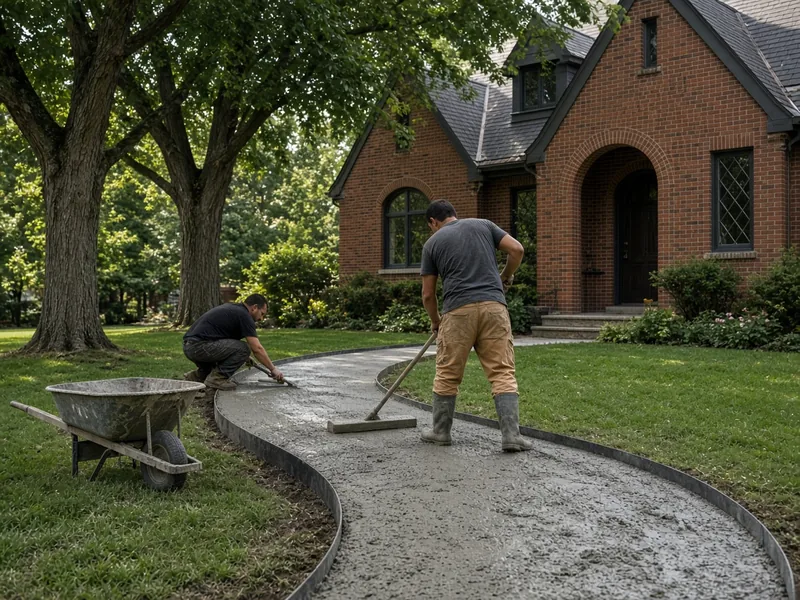
Crew floating and edging a new curved concrete front walk at a brick Tudor-style home

We'll reply by phone or email. Sending this form doesn't sign you up for text messages.

Would you rather talk it through? Call (515) 585-4111 or email info@desmoinesconcretecontractor.com.